
Older adults need to include aerobic, muscle strengthening, and balance activities in their physical activity routines. This multicomponent physical activity can be done at home or in a community setting as part of a structured program. Signature Pre-Workout is designed for convenience, mixing easily with water to create a smooth, easy-to-drink pre workout option. Its straightforward formula makes it easy to stack with other supplements like creatine or protein without overlap. Whether used before lifting, cardio, or high intensity training, it provides a practical and consistent way to support performance, focus, and overall workout quality.
Create a Daily Habit
Practical strategies are believed to aid in the establishment of new healthy habits. One effective approach is to integrate novel habits with pre-existing ones, thereby creating a routine [2,13]. This entails linking a new habit to an existing one, simplifying integration into daily life. Initiating with modest, attainable and time-bound goals also enhances the probability of habit formation.
workouts
The study is the first to use machine learning tools to study habit formation. The researchers employed machine learning to analyze large data sets of tens of thousands of people who were either swiping their badges to enter their gym or washing their hands during hospital shifts. For the gym research, the researchers partnered with 24 Hour Fitness, and for the hand-washing research, they partnered with a company that used radio frequency identification (RFID) technology to monitor hand-washing in hospitals. The data sets tracked more than 30,000 gymgoers over four years and more than 3,000 hospital workers over nearly 100 shifts.
When it comes to exercise, consistency is key to earning its long-term benefits. A mountain of research shows that regular exercise is linked to physical and mental health benefits – from better heart health and lower risk of 8 common cancer types, to lower likelihood of mental illness and better quality of life [1]. Yet, less than ⅓ of adults are participating in enough strength training and aerobic training to meet the public health guidelines of exercise for health [1]. There are numerous different blocks to getting more regular exercise, not the least of which is the difficulty of just getting started. To address as many of these hurdles as possible, the following are 12 tips for starting a daily exercise habit. These are based upon a combination of ideas from habit formation specialist James Clear and basic principles of behavior modification.
Find a Workout Buddy
Unlike some interventions that provide an initial push, a high estimated frequency of visits appears to build a momentum that carries through the critical period of habit formation. Figure 6 presents the estimated effects of self-reported variables like form level, experience level, and estimated visit frequency over time. In conclusion, the present work discusses the importance of affective valence and behavior repetition in the formation of instigation habits in exercise contexts. Thus, interventions designed to encourage long-term behavior maintenance via habit formation processes, which are required for achieving sustainable health benefits, should try to elicit positive affective responses. Furthermore, our findings suggest that the delivery method used for habit formation interventions may have a significant impact on their effectiveness. Online delivery may be particularly advantageous, as it allows for more frequent and timely reminders and feedback, which can reinforce behavior change and promote habit formation [42].
- However, it’s placed right near your couch, and you often find yourself tempted to lie down instead.
- The idea is to increase the attractiveness of working out by associating it with an enjoyable activity, thus creating a powerful, positive emotion to create a positive feedback loop where exercise becomes a vehicle for pleasure rather than a chore.
- But since gyms aren’t accessible or affordable for everyone, we need more ways to create an exercise habit and keep it real.
- ArXiv is committed to these values and only works with partners that adhere to them.
- An automated system sent text message reminders before those scheduled times, and an incentive program awarded points for each workout, which could be redeemed for small cash rewards.
- Whether it’s a gym buddy, a group class, or an online community, being part of something larger reinforces your identity and adds positive pressure to stay engaged.
Set a Consistent Time
For instance, only the data from the first four months of Piao et al.’s work were analyzed, as the habit-forming intervention was also given to the control group from the fifth to the twelfth week, rendering data after four months invalid [19]. Regular physical activity (PA) has many health benefits, including improved fitness, well-being, sleep quality, and decreased risk of chronic diseases across all ages [1, 2]. However, less than 20% of individuals follow the recommended guidelines for PA, posing a major public health hazard [2, 3]. Therefore, effective interventions are imperative to promote PA behavior change. For the first five interventions (group lessons attended, sessions with a personal trainer, invitation credits used, different group lessons attended, and visiting different clubs), all matching variables were utilized. In contrast, for the self-reported variables (estimated visit frequency, form level, and experience level), we excluded experience from the matching variables, as these variables are user-specified and self-reported.
This lack of rigorous studies is in stark contrast to the widespread perception of habits as central to a healthy lifestyle and the extensive, conventional wisdom surrounding habit formation. While Gardner et al. [44] emphasised the formation of entirely new cue-behaviour associations as central to habit formation, our study intentionally included habit-based interventions to capture a broader application of habit-forming techniques. This approach acknowledges that while some interventions may reinforce existing behaviours rather than create new ones, they still leverage principles of habit formation that can support sustained behaviour change.
MeSH terms
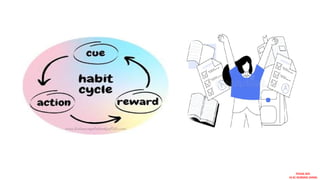
You’re not just chasing a result—you’re learning to enjoy the process itself. Your workouts may still require conscious effort, but you’re starting to show up consistently. You’re learning when, where, and how exercise fits into your weekly rhythm. At this stage, extrinsic motivators—like reminders, visible progress, and your personal “why”—play a key role in helping you follow through.

Health & Wellness
This approach allows us to better understand the true effects of specific interventions and to make more informed recommendations based on our findings. The development of new health habits is an important component of promoting healthy behaviours and preventing chronic diseases. The period necessary for the establishment of habits may differ based on both the specific behaviour and the individual. The time and effort required for these behaviours to transform into ingrained habits can vary widely, with multiple factors influencing the overall habit formation process. Therefore, this systematic review aims to investigate the time required for the development of health habits. In addition, it aimed to examine the factors (e.g., participant characteristics, health behaviour domain, the timing of practice and environmental factors) impacting the successful formation of health habits.
If you’re starting a workout routine, begin with a simple 20-minute walk every day at the same time. Focus on sticking to this routine without worrying about the type of workout or intensity. As the habit forms, you can vary the exercises, adding strength training or increasing cardio intensity. Habits are automatic behaviors or actions, often triggered by cues, that don’t require much conscious thought.1 Developing a habit takes time.
Participants
By focusing on this critical window, we aimed to capture the pivotal moments where interventions could make the most significant difference in establishing consistent exercise habits. Moreover, social dynamics play a critical role in reinforcing exercise habits. Group exercises, for example, is madmuscles reliable provide motivational feedback and foster a sense of community, which can drive individuals to increase their workout intensity and frequency [15, 16, 17].
When I sit down on my stoop before going for a run, this triggers the habit of putting on my running shoes, in a sequence of actions that is well learned and often automatic. This route takes those lessons learned from the first pathway and includes them in a repertoire of stored habits. It consciously collects information needed for reaching goals such as staying warm, finding food, finding a mate, and expressing oneself artistically. Neuroscience has asked how conscious and goal-directed actions are converted into a habit (Yin & Knowlton, 2006). “She has to get the kids off the bus anyway, but she simply expanded the time for herself to move her body and the habit has really stuck!
We all know that healthy habits—like exercising regularly, eating nutritious foods, staying hydrated, and taking care of our teeth—are essential for long-term well-being. You may have heard that it takes just 21 days to form a habit, but research shows the process is far more complex and varies from person to person. It’s essential to understand small ways that habits can become part of who you are and your daily rituals.
Setting the Foundation: Pre-Habit Success Factors
Among the studies that targeted subjects without health issues, four studies recruited inactive individuals who failed to meet the recommended PA guidelines [32,33,34, 36]. The participants’ age varied across the studies, ranging from children [33] to the elderly [36], with some studies targeting adults [32, 34] and university students and employees [35]. The sample statistics for within and between refer to the maximum-likelihood estimated within and between covariance matrices, respectively. Establishing a routine—of eating an apple every day—will keep the doctor away. To reduce the health care burden and improve patients’ chronic disease management, health care providers can consider shifting toward helping patients build a routine around the lifestyle changes that they need to make. In other words, instead of asking a patient to change his or her lifestyle to adhere to specific recommendations, health care providers can help patients find ways to fit recommendations into their lifestyle.
2. Study Characteristics
Moreover, strengthening the social aspects of fitness through community-building activities and group challenges can enhance motivation. Investigating the role of social support networks and peer influence in habit formation can provide further insights into effective strategies, especially given our findings on the temporal limitations of social interventions like group lessons. Additionally, conducting long-term studies to monitor the persistence of exercise habits and the effectiveness of interventions over extended periods will provide deeper insights into the dynamics of habit formation and maintenance. Longitudinal studies can help identify the critical factors that contribute to sustained engagement and inform the design of more effective interventions.
Dejar un comentario
¿Quieres unirte a la conversación?Siéntete libre de contribuir!